A product manager‘s deep dive into the eReader market — examining user personas, competitive landscape, and why a product everyone declared dead in 2014 is still very much alive.
Originally Published
March 2023
Research type
Secondary / Desk Research
Outcome
Purchased a Kobo
Why I Researched eReaders
I’m an avid reader. As an adult, my reading had dropped off — my tablet died, my phone screen was too small, and physical books were sometimes too bulky when I left the house. The habit was slipping through the cracks of inconvenience.
I’d dismissed eReaders a decade ago as a novelty. But in 2023, I decided to take another look — and what started as personal consumer research became a proper PM exercise in market analysis, user segmentation, and product positioning.
“I didn’t just want to find the right device. I wanted to understand why eReaders survived when the market — and the media — had already written their obituary.”
Starting with the User
The first step in any market analysis is understanding who you’re designing for — and resisting the temptation to assume a narrow default persona. The eReader is often stereotyped as a product for a specific demographic. That framing undersells it and blinds product teams to real opportunity.
User Personas
A
Ali, 17
High school student, ESL learner
Learning English as a second language, Ali benefits from built-in dictionaries, adjustable text settings, and access to books in multiple languages — features a paperback can’t offer.
Accessibility · Language
A
Amy, 35
Sales professional, frequent traveler
Reads more than one book a month plus daily articles. Travels often. The portability and instant purchase capability of an eReader maps directly to her lifestyle — it removes friction at every step.
Power user · Portability
V
Vera, 72
Retired nurse, vision impaired
Vera reads frequently but struggles with small print. An eReader lets her control font size and contrast — giving her back an independent reading experience that large-print books partially solve but don’t nail.
Vision · Inclusion
D
Donna, 42
Photographer, lives with dyslexia
Donna has adapted her reading habits around her dyslexia. eReaders with dyslexia-friendly fonts, custom spacing, and audio integration offer tools traditional publishing has never prioritized.
Accessibility · Audio
💡PM Reflection
Creating a diverse set of user personas during product discovery surfaces edge cases that often turn out to be significant market segments. Vera’s persona alone points to an underserved audience with high willingness to pay and strong product-market fit. Most eReader marketing misses her entirely.
Personas are most valuable when they actively challenge the team’s assumptions about who they’re building for — not just document the obvious user.
eReader or Book? How We Got Here
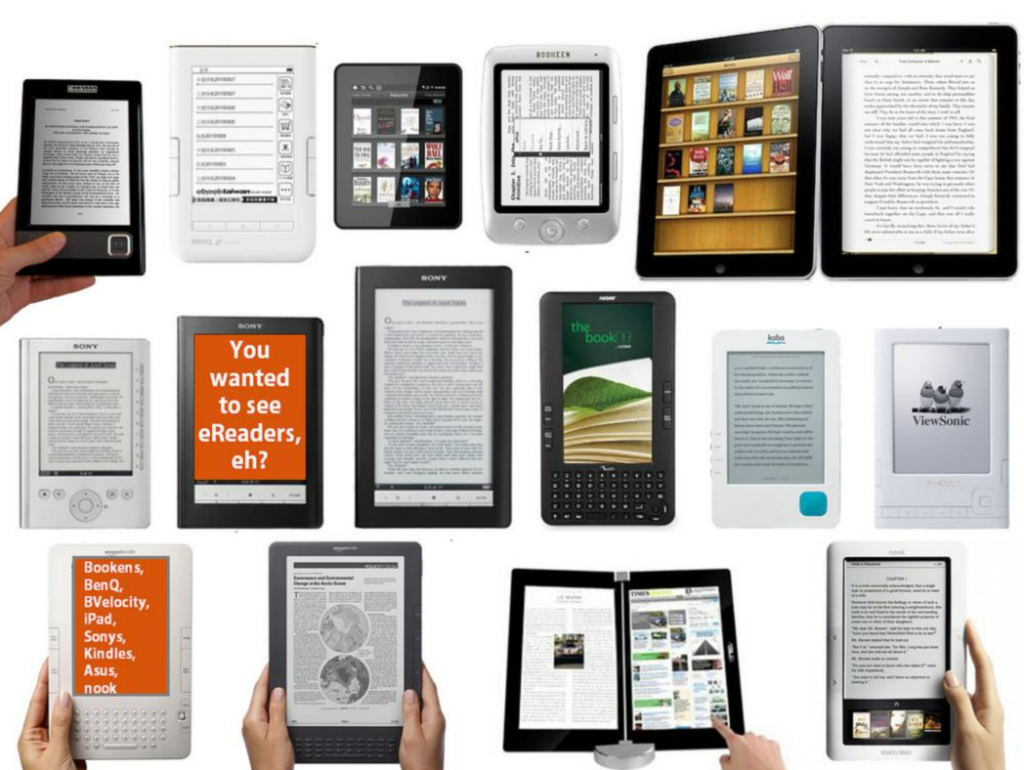
Understanding a product’s current position requires reading its history — especially when that history includes a near-death experience. The eReader’s trajectory tells a clear story about disruption, platform competition, and product resilience.
📍Early 2000s
First eReaders launched using e-ink displays — purpose-built for reading, with battery life measured in weeks rather than hours.
📍2010–2011
The Apple iPad and Amazon Kindle tablet launch. LCD screens and multi-function devices drive eReader sales to peak at 23.2 million units worldwide. eReaders are mainstream.
📍2012
Sales decline 26% year-over-year. eReader apps (iBooks, Kindle app) allow tablets to replace standalone devices. The standalone eReader looks like a category mistake in hindsight.
📍2014
Sony shuts down its eReader business, transferring its bookstore to Kobo. The majority of tech press declares eReaders dead. The fad narrative takes hold.
📍2014–2016
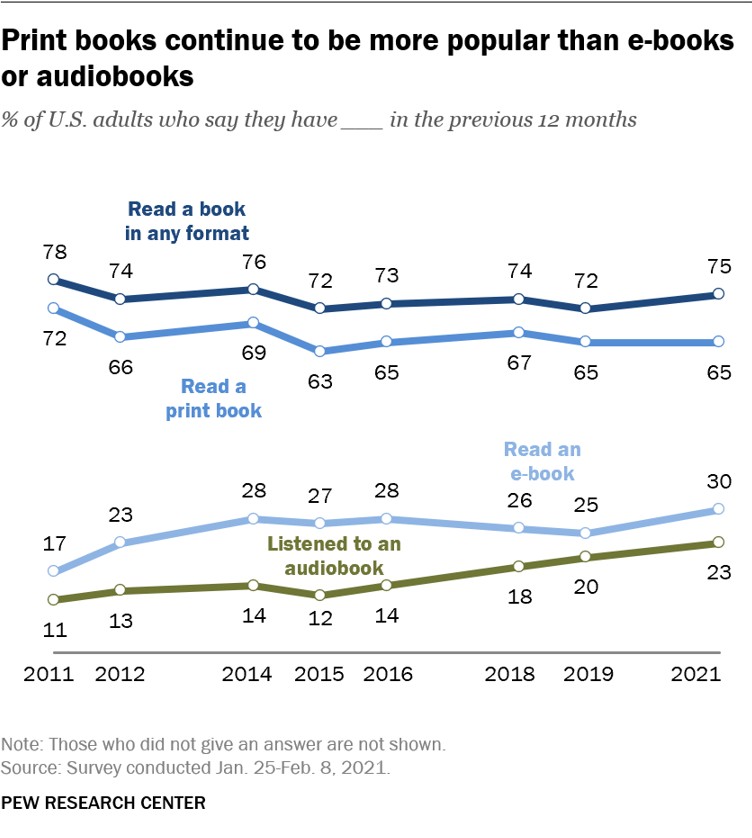
PEW Research Center finds a steady 28% of US adults are reading eBooks — the category never actually died. It stabilized and found its core audience.
📍2020–2021
Pandemic drives a 4% growth in eBook adoption. More time at home, more reading. The category benefits from hardware improvements: WiFi library access, better screens, longer battery life.
💡PM Reflection
The 2012 decline was misread as category death when it was actually platform consolidation. Tablets absorbed casual readers; eReaders retained the dedicated ones. This is a classic case of survivorship bias distorting analysis — the loudest signal (declining hardware sales) masked a more durable underlying behavior (reading eBooks).
The lesson for product managers: always separate device metrics from behavior metrics. A drop in standalone player sales doesn’t mean people stopped listening to music.
The Current Landscape
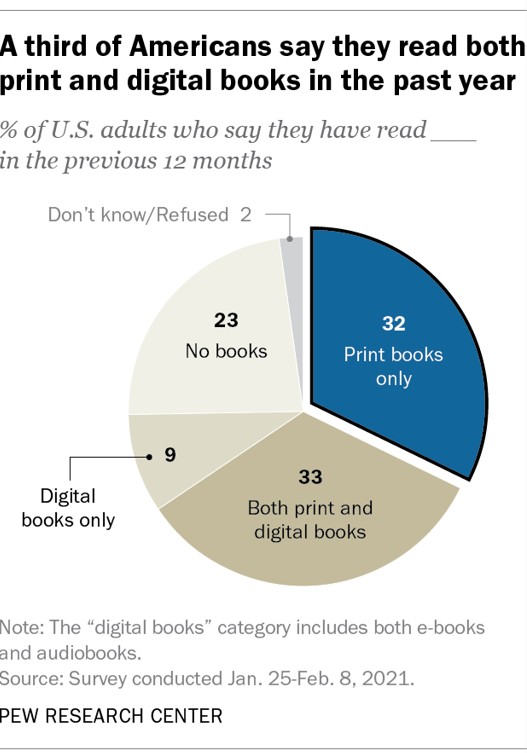
My analysis draws on publicly available secondary research — Statista, Technavio, PEW Research Center, and Booknet Canada. I’m transparent about its limits: I don’t have access to proprietary industry reports. But the available data is sufficient to form a clear directional picture.
28%
of US adults read an eBook in the 2014–2016 baseline period (PEW)
⅔
of eBooks consumed via apps, not dedicated eReaders (Booknet Canada, 2018)
+4%
eBook adoption growth during 2020–2021 pandemic period
$125
average eReader price (CAD) — roughly 25 books to break even on savings
Geographic opportunity
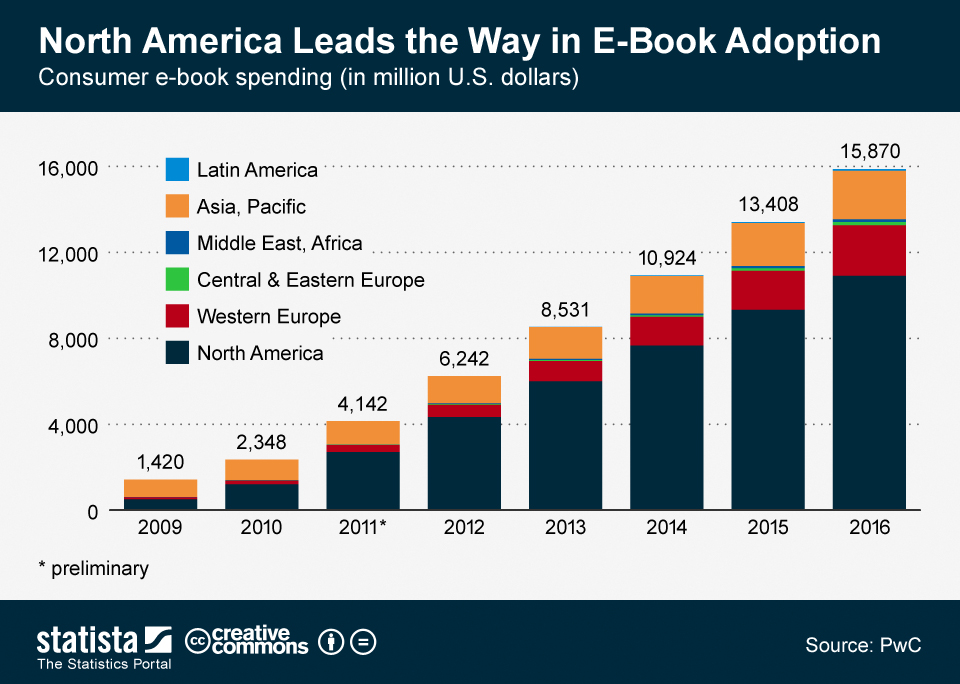
Growth is slowing in North America, which has been the dominant market since the category’s inception. The highest growth potential sits in Asia and Western Europe — regions with large reading populations but lower eReader penetration. Whether that gap reflects product awareness, unmet local needs, or distribution challenges is worth investigating further.
Competitive landscape
The market is crowded, with players dominating specific regions. Many offer multiple devices at tiered price points, competing on screen quality, storage, and ecosystem lock-in.
Amazon (US)
Barnes & Noble (US)
Rakuten/Kobo (CA)
Onyx International (CN)
PocketBook (CH)
Bookeen (FR)
inkBOOK (PL)
Hanwang (CN)
The primary competitive threat isn’t other eReaders — it’s tablets. Multi-function devices from Apple, Amazon, Samsung, and Lenovo offer eReader apps alongside everything else. For casual readers, the incremental value of a standalone eReader is hard to justify at $125 when they already own a tablet.
What Drives and Blocks Adoption
Converting a user to eReaders means more than showcasing features. Paper books have ~600 years of habitual muscle memory behind them. Adoption requires mitigating real deterrents while clearly communicating value that paper can’t match.
Benefits
✅ Entire library in one lightweight device — same weight as a 150-page paperback
✅ Instant purchases via WiFi, no bookstore trip required
✅ Adjustable font size, spacing, and font type — inclusive by design
✅ eBooks average $5 CAD cheaper than print equivalents
✅ Backlighting enables reading in the dark or direct sunlight
Deterrents
❌ Loss of tactile experience — page-turning, physical weight, the feel of a book
❌ Another screen in a life already dominated by screens
❌ $125 upfront investment before any cost savings materialize
❌ Break-even requires reading ~25 books — a long horizon for casual readers
❌ Ecosystem lock-in: books often tied to one platform or store
💡PM Reflection — Reducing Adoption Friction
The $125 upfront cost is the sharpest barrier. Device trials — through libraries, schools, or retail — are the most direct way to let users experience the benefits before committing. Flexible payment options would help widen the addressable market further.
Libraries and schools are also natural distribution channels that remain underutilized. Introducing eReaders to students or new readers in institutional settings — where devices are shared rather than owned — removes the cost barrier entirely and seeds long-term adoption.
What the Research Told Me
The eReader didn’t die in 2014. It narrowed. It shed the casual users who migrated to tablets and retained the readers who cared about the reading experience above all else. That’s not category failure — that’s a product finding its true audience.
The smart strategic play isn’t to force a choice between digital and print. It’s to remove barriers to reading in any form. Users should be able to move fluidly between mediums based on context. The eReader is most valuable not as a replacement for paper books, but as a complement — giving readers more options, not fewer.
The largest untapped opportunity sits in Asia and Western Europe, where North America’s adoption curve hasn’t been replicated yet. Whether that’s a distribution problem, an awareness problem, or a product-fit problem requires further research — but it represents meaningful runway for the category.
“By the end of the research, I bought a Kobo. That’s probably the most honest signal I can offer about where the analysis landed.”
Update (3 years later): I can definitively confirm that my eReader are key to me being able to read 45+ books a year. I slip it into my purse or jacket pocket and have a book with me at ALL TIMES! That said, I still end up reading paper books because I buy books second hand but those books don’t travel well. My conclusion still stands in 2026. The more ways you can read, the better. If you can afford it & you’re in Canada, buy a Kobo. Read more.
Resources
I used the following published texts in the research of this topic.
- The growing use of e-books is notably driving the e-reader market growth (E-reader Market by Variant and Geography – Forecast and Analysis 2022-2026)
- The eReader Market Industry Analysis https://www.technavio.com/report/e-reader-market-industry-analysis#:~:text=The e-reader market share,companies evaluate their business approaches.
- Wikipedia: E-Reader Article
- https://selfpublishingadvice.org/what-readers-want-2022/
- https://www.pewresearch.org/fact-tank/2022/01/06/three-in-ten-americans-now-read-e-books/
- Statistica: North America Leads the Way in eBook Adoption
- https://www.twobirdsbreakingfree.com/how-to-choose-the-perfect-e-reader-for-travel